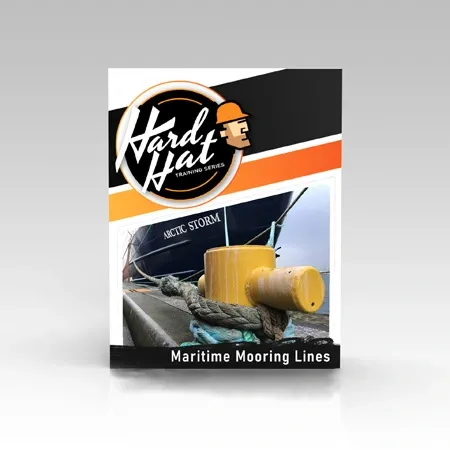
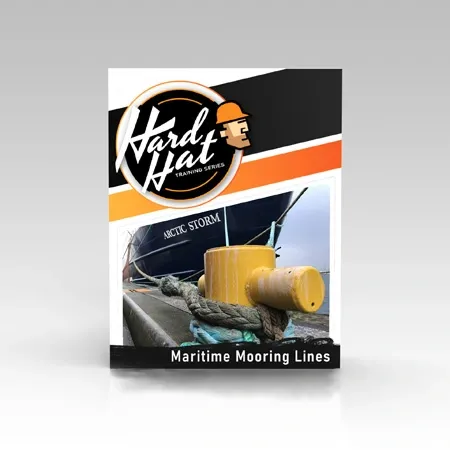
Maritime Mooring Lines Training & Certification
Built to STCW standards as put forth by the IMO. Also complies with OSHA and Canada applicable standards.
We Offer Three Types of Mooring Lines Safety Trainings
Our regulation-aligned Mooring Lines certification courses are updated to reflect the most recent changes made to safety standards. Whether you want a certification in as little as two hours, or a more robust training, we can help! We offer online trainings that can be completed in a day, DIY training kits that provide training materials, Train the Trainer certifications that certify individuals to train others and provide training materials, or onsite training. No matter what you choose, we can get you what you want, at a price you can afford.

Online training is for those who prefer self-paced training from any location and/or for employers who need to assign and monitor employee training progress and exam scores.

The training kit is for those who want the freedom of doing the training themselves. It is a PowerPoint Presentation (PPT) that you can present yourself to a group of trainees.

Train the Trainer courses are online and meant to certify an individual to use the training kit to train others. Training kit and materials are included with the Train the Trainer online course for no additional cost.

What’s in the Maritime Mooring Lines Training Course?
Our Mooring Line Safety training course is OSHA Aligned, and our online version fulfills OSHA’s classroom training requirement.
This presentation includes intermittent practice quiz questions to prepare for the final written exam included with the course. In addition to the written exam, this course also includes a checklist for employers to use when administering a practical exam as required by OSHA.
Estimated Training Length: Because everyone learns and progresses at different speeds, the amount of time you spend taking this training will vary. However, the estimated time for this training is 2 – 2.5 hours.
Course Goals:
- Understand the importance of mooring and how it affects you
- Understand basic components of and maintenance of equipment
- Have a respect for the hazards and forces involved in mooring lines
Training Scope:
- Equipment
- Arrangements
- Forces & Stability
- Safe Operations
- Hazards
Intended Audience:
- Employees
- Supervisors
- Managers
- Employers
See Purchase Options
For most courses, we offer OSHA trainings in English and Spanish, CAL/OSHA trainings in English, and Canada trainings in English. See all of our options!
Online Purchase Options

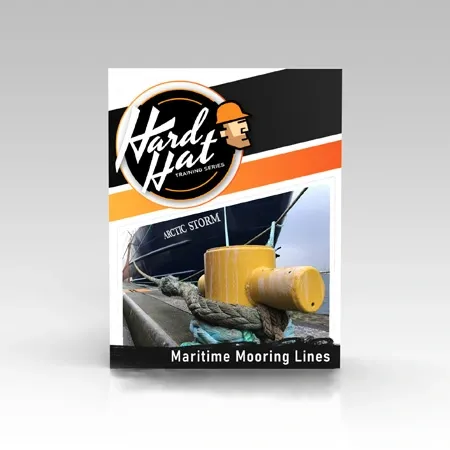
Training Kit Purchase Options
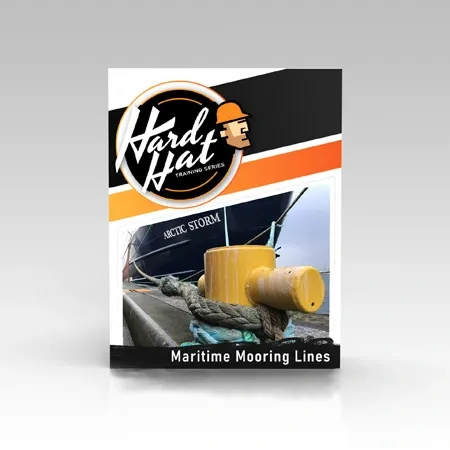
Train the Trainer Purchase Options
Mooring Lines Certification Standards
-
U.S. Standards
- 29 CFR 1917.16(a): Cargo storage near mooring lines
- 29 CFR 1917.16(b): Grab lines and rails for insufficient stringpiece or apron width
- ANSI ASTM F1099-18: Rat guards
- ANSI ISO 15084:2003: Strong points
- OSH Act of 1970, 5(a)(1)
-
Canada Standards
- OHSR Part 24: Diving, Fishing and Other Marine Operations
- Transport Canada: Practices and Procedures for Public Ports
Train the Trainer Certification
The Train the Trainer option is used to certify a trainer to teach others using the included training kit. It incorporates the online course with an additional train the trainer module, as well as the training kit. This option results in an regulation-aligned lifetime trainer certification from Hard Hat Training. This certification is not company-specific, meaning you can take it with you should you change employers.

Why Do I Need Mooring Lines Safety Training?
In line with regulations, anyone using mooring lines must recieve training prior to organizing and using the ropes. Normally, using mooring lines requires an entire ship’s crew. Most other equipment doesn’t have such specific requirements, but it’s wise to follow the same guidelines.
When it comes to refresher training, the standards in some instances (like forklifts) are very specific: an operator must take a refresher course if they are observed operating the equipment in an unsafe manner, if they are involved in an accident or a near miss, if they received a poor evaluation for performance, if they are required to use a different type of machine or attachment, or if workplace conditions have changed. Regulations also state that it is the employer who is responsible for determining the frequency of refresher training.
Stay Informed On All Things Mooring Lines
-
Did You Know?
Sailors began using the base word of “mooring” in the 1500s, but the system of tying boats dates back before 1,000 B.C.
According to one study, the most common type of fatality in shipping involves mooring lines, tow ropes, etc. striking workers. 60% of Maritime fatalities are mooring issues.
50% of deaths in the shipping industry occur among deck ratings.
See Purchase Options
For most courses, we offer OSHA trainings in English and Spanish, CAL/OSHA trainings in English, and Canada trainings in English. See all of our options!
