OSHA 10 Outreach Program
Hard Hat Training is owned and operated by 360training, an OSHA-authorized outreach training provider, offering OSHA 10 for construction and general industry.

Hard Hat Training is owned and operated by 360training, an OSHA-authorized outreach training provider, offering OSHA 10 for construction and general industry.
What is online training? Our online trainings are great for those who want to learn at their own pace and on their own time. Online trainings can be completed from any location, eliminating the need for expensive seminars. Employers can assign employees specific trainings and keep track of their progress and exam scores. We also offer DIY Kits and Train the Trainer courses. Use the filter above to see these options.
What is Train the Trainer? Train-the-trainer courses allow employers to take full control of the training process. Employees who take these courses are fully certified to use the training kit and train others. This means that employers can hold training seminars and courses without the need for third-party trainers. Employees who complete these courses are certified for life and can train others confidently with a well-tested learning model. We also offer online trainings and DIY training kits. Use the filter above to see these options.
What is a DIY training kit? Our training kits offer a full training experience alongside a comprehensive toolset for further learning. These kits are the perfect resource for those who want the freedom of training employees themselves. Unlike traditional trainings that are taken once, the kit offers a complete initial training as well as activities and materials to train employees long after they’ve been certified. We also offer online trainings and Train the Trainer courses. Use the filter above to see these options.
This purchase come with informative, training videos, and training presentation, the training kit materials. This is a great option for any business that would like to certify its employees using video training.
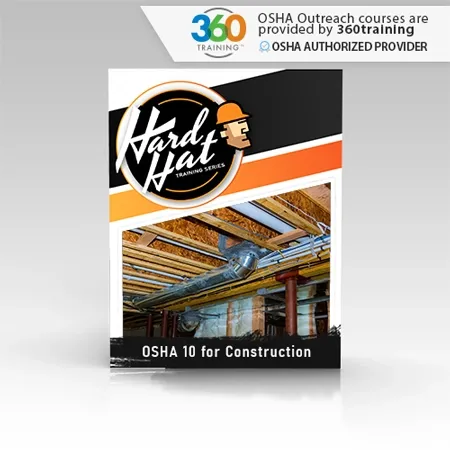
$ 89.00 $ 59.99
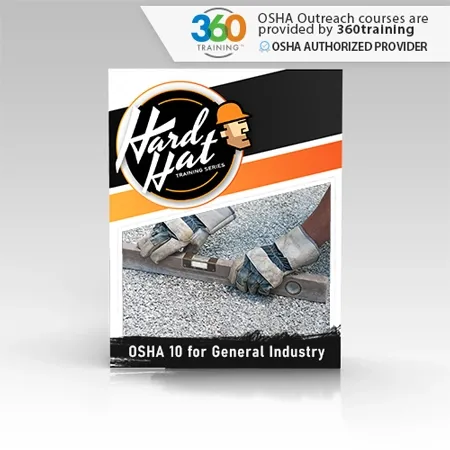
$ 89.00 $ 59.99
Not sure which is right for you? Check out our What Is The Difference Between OSHA 10 Construction And General Industry Article.
OSHA Outreach courses are provided by 360training, an OSHA-authorized outreach training provider. For assistance or questions pertaining to an OSHA 10 or OSHA 30 course, please use the information below.
Customer Support: 877.881.2235
Current Trainer: Jason Cole, OHST oshatrainer@360training.com

An OSHA 10-hour training course is a course with two options for either construction or general industry. It is intended to teach basic health and safety practices. The course contains ten hours of information regarding workers’ rights, employer responsibilities, hazard recognition, safety procedures, how to file a complaint, etc.
OSHA 10-hour training courses are intended for entry-level workers and are not specific to any job site. Not all occupations, states, and employers require entry-level workers to take this course. Even if you are not required to take an OSHA 10-hour course, it is highly recommended that you do anyway so that you can educate yourself on basic safety principles. For more information including covered topics in the course check out our Ultimate Guide To OSHA 10 Training And Certification.
OSHA 30-hour training is a course much like OSHA 10 but is intended for supervisors or employees who manage safety in the workplace. It covers basic safety information and training on how to recognize, report, and handle hazards in the workplace.
It also delves into the specific roles of supervisors regarding the health and safety of the employees they will be working with.
DOL student course completion cards are small, wallet-sized, plastic cards showing that you are certified in a particular topic. These cards are issued to everyone who completes an OSHA 10 or OSHA 30 course. When you receive your card, you should carry it on your person at all times while working. It is proof to your employer that you have completed the OSHA 10 and/or 30 course.
Students will receive a temporary, online certificate (issued by 360training.com) upon completion of an Outreach Training Program. After the mandatory reporting process, the card is printed and mailed to the student within 2 weeks.
Yes, Department of Labor (DOL) Cards are the same as OSHA cards that are obtained through the OSHA Outreach Training Program. They are official cards issued by the United States Department of Labor to anyone who completes an OSHA 10 or 30 course through the OSHA Outreach Training Program.
Cards received elsewhere are simply referred to as OSHA cards because they are not directly issued by the U.S. Department of Labor.
The OSHA Outreach Training Program was created in 1971 and works to make safety training more readily available. The program is voluntary and not directly run by OSHA. This means that the program is made up of certified trainers who provide training classes for specific topics either in person or online.
All courses in this program teach about workplace hazards, workplace safety, and workers’ rights.
As stated above, OSHA 10 courses cover a lot of basic safety information that is not specific to any single workplace. Some information you can expect in the training includes:
General Industry covers a lot of specific topics that may or may not be present in every workplace within an industry. Some of these topics covered in an OSHA 10 general industry course include:
Ladders & Stairways: These are present in almost every workplace, and safety, inspection, and types of ladders and stairways are somethings you need to know to avoid improper and unsafe use.
Most of the topics discussed in the OSHA 10 general industry course will also be covered in the OSHA 10 construction course. The biggest way the two courses differ is that the construction training is presented in the context of a construction workplace rather than the factory or warehouse setting that is usually associated with general industry. In addition to the general industry topics, the construction industry course includes:
Hierarchy of controls: You will learn the hierarchy of controls and how they pertain to the safety measures taken to control or prevent hazards. The most effective of these controls is elimination, and the least effective is PPE.
There aren’t any other OSHA 10-Hour courses other than the OSHA 10 construction and OSHA 10 general industry courses. It is possible that there are safety training courses that will take ten hours to complete, but they are not necessarily referred to as an OSHA 10 course.
There are plenty of other course options out there that you can take to improve your safety knowledge. Which courses you should take will depend on your workplace and what your employer will require of you. Luckily, here at Hard Hat Training, we can provide you with whatever safety training you need.
Our course options range not just from construction and general industry, but also maritime, agriculture, human resources, and more. Our courses will prepare you to work safely and face workplace hazards.
