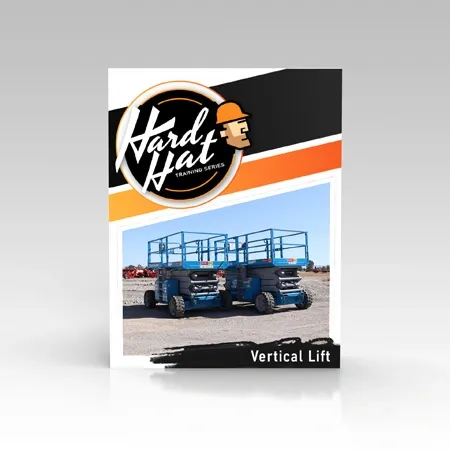
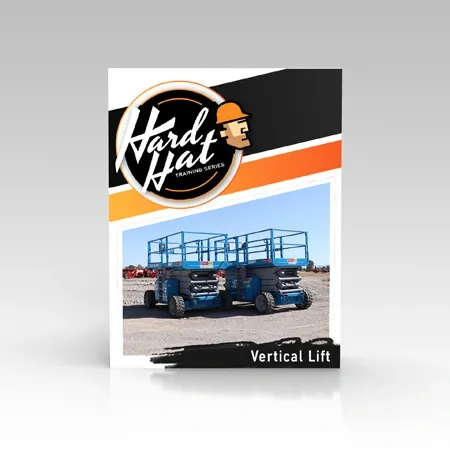
Vertical Lift Training & Certification
Hard Hat Training courses meet all training requirements set by OSHA and CSA.
We Offer Three Types of Vertical Lift Safety Trainings
Our regulation-aligned Vertical Lift certification courses are updated to reflect the most recent changes made to safety standards. Whether you want a certification in as little as two hours, or a more robust training, we can help! We offer online trainings that can be completed in a day, DIY training kits that provide training materials, Train the Trainer certifications that certify individuals to train others and provide training materials, or onsite training. No matter what you choose, we can get you what you want, at a price you can afford.

Online training is for those who prefer self-paced training from any location and/or for employers who need to assign and monitor employee training progress and exam scores.

The training kit is for those who want the freedom of doing the training themselves. It is a PowerPoint Presentation (PPT) that you can present yourself to a group of trainees.

Train the Trainer courses are online and meant to certify an individual to use the training kit to train others. Training kit and materials are included with the Train the Trainer online course for no additional cost.

What’s in the Vertical Lift Training Course?
Our Vertical Lift safety training course is regulation aligned, and our online version fulfills OSHA’s classroom training requirement. Each class contains sections on equipment and anatomy, maintenance and inspections, safe operations and stability, common hazards, and more.
Training Scope: Each class contains the following information:
- Anatomy & Components
- Interior
- Exterior
- Stability
- Operations
- Know Your Machine
- Know Your Worksite
- Investigated Case Studies
This presentation includes intermittent practice quiz questions to prepare for the final written exam included with the course. In addition to the written exam, this course also includes a checklist for employers to use when administering a practical exam as required.
Estimated Training Length: Because everyone learns and progresses at different speeds, the amount of time you spend taking this training will vary. However, the estimated time for this training is 2 – 2.5 hours.
Intended Audience:
- Employees
- Supervisors
Course Goals:
- Understand the importance of a pre-shift inspection and how to perform one
- Recognize the common hazards associated with vertical lifts and how to avoid or mitigate them
- Learn how to operate safely in a variety of on-site situations
See Purchase Options
For most courses, we offer OSHA trainings in English and Spanish, CAL/OSHA trainings in English, and Canada trainings in English. See all of our options!
Online Purchase Options
Training Kit Purchase Options
Train the Trainer Purchase Options
Vertical Lift Certification Standards
-
U.S. Standards
- OSH ACT 1970
- ANSI A92.2 (Vehicle Mounted Elevating and Rotating Aerial Devices)
- ANSI A92.3 (Manually Propelled Elevating Aerial Platforms)
- A92.5 (Boom Supported Elevating Work Platforms)
- A92.6 (Self-Propelled Elevating Work Platforms)
- A92.8 (Vehicle Mounted Bridge Inspection and Maintenance Devices)
- A92.20 (Design, Calculations, Safety Requirements, Test Methods for MEWPs)
- A92.22 (Safe Use of MEWPs)
- A92.24 (Training Requirements for MEWP Operators
- 1910 Subpart F – Powered Platforms, Man lifts, Vehicle Mounted Work Platforms
- 1910.23 – Guarding Floor and Wall Openings and Holes
- 1910.28 – Safety Requirements for Scaffolding
- 1910.29 – Manually Propelled Mobile Ladder Stands and Scaffolds (Towers)
- 1910.67 – Vehicle Mounted elevating and rotating work platforms
- 1910.333 – Selection and Use of Work Practices Shipyards
- 1915.71 – Scaffolds or Staging Construction
- 1926, Subpart L – Scaffolds
- 1926.21 – Safety Training and Education
- 1926.451 – General Requirements
- 1926.452 – Additional Requirements to Specific Types of Scaffolds
- 1926.453 – Aerial Lifts
- 1926.454 – Training Requirements
- 1926.501, 502 – Duty to have Fall Protection
- 1926.556 – Aerial Lifts
-
Canada Standards
- CAN/CSA B354.6:17 (Design, Calculations, Safety Requirements, and Test Methods)
- CAN/CSA B354.7:17 (Safety Principles, Inspection, Maintenance, and Operation)
- CAN/CSA B354.8:17 (Operator [Driver] Training)
- CAN/CSA B354.5 (Mast Climbing)
- CAN/CSA B354.6 (Design)
- CAN/CSA B354.7 (Safe Use)
- CAN/CSA B354.8 (Training)
- CAN/CSA C225 (Vehicle Mounted Aerial Devices)
- CAN/CSA Z259 AND SUBSECTIONS (Fall Protection, Arrest)
- CAN/CSA Z271 (Safety Code for Elevating Platforms)
Train the Trainer Certification
The Train the Trainer option is used to certify a trainer to teach others using the included training kit. It incorporates the online course with an additional train the trainer module, as well as the training kit. This option results in an regulation-aligned lifetime trainer certification from Hard Hat Training. This certification is not company-specific, meaning you can take it with you should you change employers.

Why Do I Need Vertical Lift Safety Training?
In line with regulations, anyone who operates heavy equipment must receive training prior to operating the machine on their own. For example, requirements for refresher training related to forklifts or other processes are very specific. Most other equipment doesn’t have such specific requirements, but it’s wise to follow the same guidelines.
When it comes to refresher training, the standards in some instances (like forklifts) are very specific: operators must be re-evaluated every three years to see if they are still competent to operate the equipment. Best practices say to apply this same rule to all types of equipment. A so-called “free-pass” cannot be awarded based on experience, age, or time on the job. The extent of the evaluation is to be determined by the employer but should include a written and practical examination that prove continued competency.
Stay Informed On All Things Vertical Lift
-
Did You Know?
On average, 26 construction workers die each year while using aerial lifts, which accounts for two to three percent of all construction deaths.
The main causes of these deaths and other non-fatal accidents from aerial lifts are falls, electrocutions, and collapses or tip overs.
Falls are the leading cause of death for construction workers, killing more than 200 U.S. workers each year. (Source: CDC).
See Purchase Options
For most courses, we offer OSHA trainings in English and Spanish, CAL/OSHA trainings in English, and Canada trainings in English. See all of our options!
