Signal Person Training & Certification
Hard Hat Training courses meet all training requirements set by OSHA and Canada.
We Offer Three Types of Signal Person Safety Trainings
Our regulation-aligned Signal Person certification courses are updated to reflect the most recent changes made to safety standards. Whether you want a certification in as little as two hours, or a more robust training, we can help! We offer online trainings that can be completed in a day, DIY training kits that provide training materials, Train the Trainer certifications that certify individuals to train others and provide training materials, or onsite training. No matter what you choose, we can get you what you want, at a price you can afford.

Online training is for those who prefer self-paced training from any location and/or for employers who need to assign and monitor employee training progress and exam scores.

The training kit is for those who want the freedom of doing the training themselves. It is a PowerPoint Presentation (PPT) that you can present yourself to a group of trainees.

Train the Trainer courses are online and meant to certify an individual to use the training kit to train others. Training kit and materials are included with the Train the Trainer online course for no additional cost.

What’s in the Crane Signal Person Training Course?
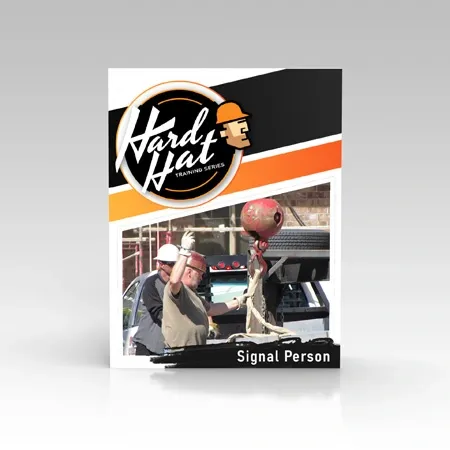
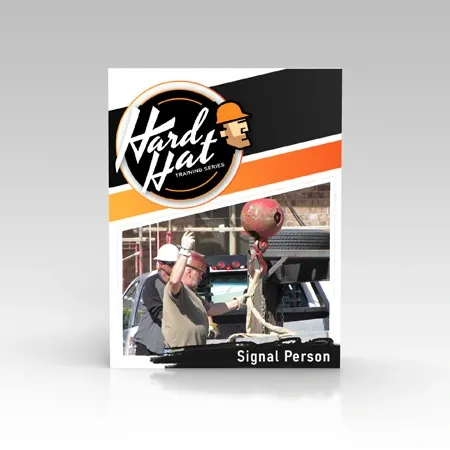
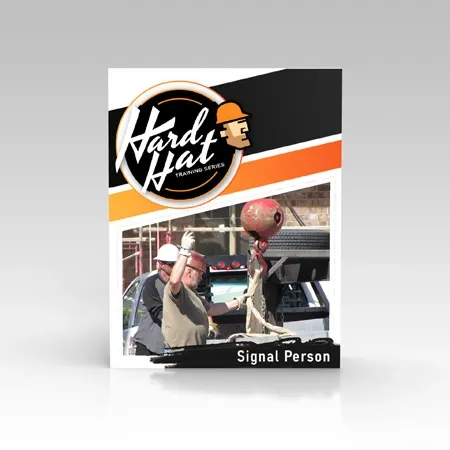
Our Signal Person training course is regulation aligned, and our online version fulfills classroom training requirements. Each class contains sections on general information, site setup, crane operations, hand signals, and case studies.
During this training, we will be taking a look at what is required to become a signal person. We will talk about how to work safely around common signaling hazards and some basic safety principles. Finally, we will look at some case studies to help you apply your new knowledge. They will highlight some common hazards and mistakes that happen every day on the worksite.
This presentation includes intermittent practice quiz questions to prepare for the final written exam included with the course. In addition to the written exam, this course also includes a checklist for employers to use when administering a practical exam as required by OSHA.
Estimated Training Length: Because everyone learns and progresses at different speeds, the amount of time you spend taking this training will vary. However, the estimated time for this training is 1 – 1.5 hours.
Intended Audience:
- Signalers
- Operators
- Employees
See Purchase Options
For most courses, we offer OSHA trainings in English and Spanish, CAL/OSHA trainings in English, and Canada trainings in English. See all of our options!
Online Purchase Options
Training Kit Purchase Options
Train the Trainer Purchase Options
Signal Person Certification Standards
-
U.S. Standards
- 29 CFR 1926.1419 – Signals: general requirements
- 29 CFR 1926.1420 – Signals: radio, telephone or other electronic transmission of signals
- 29 CFR 1926.1421 – Signals: voice signals—additional requirements
- 29 CFR 1926.1422 – Signals: hand signal chart
-
Canada Standards
- ISO 16715:2014 – Hand Signals Used with Cranes
- CAN/CSA-Z150-11 – Safety Code on Mobile Cranes
Train the Trainer Certification
The Train the Trainer option is used to certify a trainer to teach others using the included training kit. It incorporates the online course with an additional train the trainer module, as well as the training kit. This option results in an regulation-aligned lifetime trainer certification from Hard Hat Training. This certification is not company-specific, meaning you can take it with you should you change employers.

Why Do I Need Signal Person Safety Training?
In line with regulations, anyone who acts as a signal person must receive training prior to working on their own. Requirements for refresher training related to forklifts or other processes are very specific. Most other equipment doesn’t have such specific requirements, but it’s wise to follow the same guidelines.
When it comes to refresher training, the standards in some instances (like forklifts) are very specific: operators must be re-evaluated every three years to see if they are still competent to operate the equipment. Best practices say to apply this same rule to all types of equipment. A so-called “free-pass” cannot be awarded based on experience, age, or time on the job. The extent of the evaluation is to be determined by the employer but should include a written and practical examination that prove continued competency.
Stay Informed On All Things Signal Person
-
Did You Know?
From 2011 to 2017, there were 297 total crane-related deaths reported — that’s an average of 42 per year. (Source: BLS).
Nearly 50% of all fatal crane injuries were caused by an employee being struck by an object or equipment. (Source: BLS).
Cranes were invented in Ancient Greece. (Source: Hevi-Haul).
-
Safety Videos
See Purchase Options
For most courses, we offer OSHA trainings in English and Spanish, CAL/OSHA trainings in English, and Canada trainings in English. See all of our options!
