
Gas Detection Training & Certification Course
Hard Hat Training courses meet all training requirements set by OSHA and Canada.
We Offer Three Types of Gas Detection Safety Trainings
Our regulation-aligned Gas Detection certification courses are updated to reflect the most recent changes made to safety standards. Whether you want a certification in as little as two hours, or a more robust training, we can help! We offer online trainings that can be completed in a day, DIY training kits that provide training materials, Train the Trainer certifications that certify individuals to train others and provide training materials, or onsite training. No matter what you choose, we can get you what you want, at a price you can afford.

Online training is for those who prefer self-paced training from any location and/or for employers who need to assign and monitor employee training progress and exam scores.

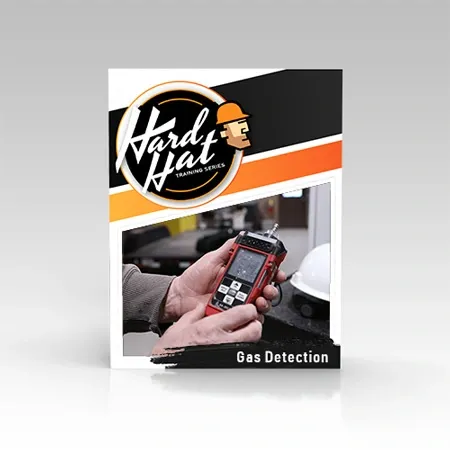
The training kit is for those who want the freedom of doing the training themselves. It is a PowerPoint Presentation (PPT) that you can present yourself to a group of trainees.

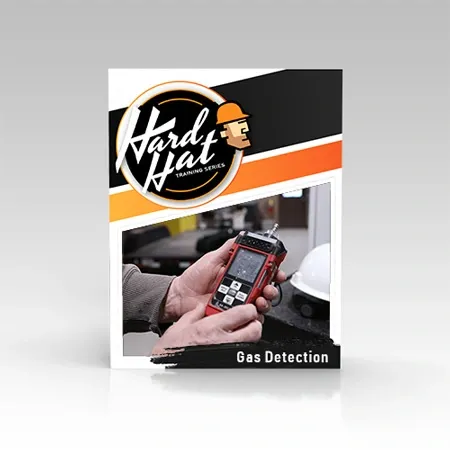
Train the Trainer courses are online and meant to certify an individual to use the training kit to train others. Training kit and materials are included with the Train the Trainer online course for no additional cost.

What’s in the Gas Detection Training Course?
Our Gas Detection training course is OSHA Aligned, and our online version fulfills OSHA’s classroom training requirement.
This presentation includes intermittent practice quiz questions to prepare for the final written exam included with the course. In addition to the written exam, this course also includes a checklist for employers to use when administering a practical exam as required by OSHA.
Intended Audience:
- Employees
- Supervisors
- Managers
Course Goals:
- Understand the importance of gas detection and how it affects you
- Understand terminology and controls related to mitigating gas-related hazards
- Understand the advantages and limitations of various gas detectors and sensors
- Understand the importance of regularly calibrating and maintaining gas detection equipment
- Understand the precautions you should take when testing a worksite for hazardous gases
Estimated Training Length: Because everyone learns and progresses at different speeds, the amount of time you spend taking this training will vary. However, the estimated time for this training is 2 – 2.5 hours.
Training Scope:
- General Knowledge
- Terms & Definitions
- Controls
- Detection Devices
- Detectors
- Sensors
- Meters
- Calibration & Maintenance
- Atmospheric Testing
- Testing Practices
- Substance Testing
- Technical Considerations
- Translating Readings
See Purchase Options
For most courses, we offer OSHA trainings in English and Spanish, CAL/OSHA trainings in English, and Canada trainings in English. See all of our options!
Online Purchase Options
Training Kit Purchase Options
Train the Trainer Purchase Options
Gas Detection Certification Standards
-
U.S. Standards
- 29 CFR 1910.1000 – Air Contaminants
- 29 CFR 1910.146 – Permit-required Confined Spaces
- 29 CFR 1910.269 – Electric Power Generation, Transmission, and Distribution
- 29 CFR 1910.272 – Grain Handling Facilities
- 29 CFR 1915.12 – Precautions and the Order of Testing Before Entering Confined and Enclosed Spaces and Other Dangerous Atmospheres
- 29 CFR 1926.65 – Hazardous Waste Operations and Emergency Response
-
Canada Standards
- Oil and Gas Occupational Safety and Health Regulations (SOR/87-612) Part XI Section 11 – Division 1 – General
- CAN/CSA-C22.2 No. 60079-29-1 – Explosive Atmospheres Part 29 Section 1 – Gas Detectors – Performance Requirements of Detectors for Flammable Gases
- Canada Labour Code (R.S.C., 1985, c. L-2)
Train the Trainer Certification
The Train the Trainer option is used to certify a trainer to teach others using the included training kit. It incorporates the online course with an additional train the trainer module, as well as the training kit. This option results in an regulation-aligned lifetime trainer certification from Hard Hat Training. This certification is not company-specific, meaning you can take it with you should you change employers.

Why Do I Need Gas Detection Safety Training?
In line with regulations, anyone who works in an area with potential gas hazards must receive training prior to entering the work area. Under the General Duty Clause, Section 5(a)(1) of the Occupational Safety and Health Act (OSHA) of 1970, employers are required to provide a workplace that “is free from recognizable hazards that are causing or likely to cause death or serious harm to employees.”
This means employers have a legal and ethical obligation to promote a work environment that is free from toxic gases and other gaseous hazards. You and your coworkers have the right to work in an atmosphere that promotes the safety, equality, and well-being of all.
Stay Informed On All Things Gas Detection
-
Did You Know?
A common detector can usually detect oxygen, carbon monoxide, hydrogen sulfide, and flammable gases.
Approximately 3 in 1,000 gas detectors fail to respond to a dangerous concentration of gas. However, if a detector hasn’t been tested in over 25 days, then 1 in 100 gas detectors will fail to accurately respond.
Symptoms of high oxygen levels in the eyes include eyelid twitching and blurry vision. High oxygen concentrations can also damage the lens and can lead to myopia, or nearsightedness, and cataract formation.
See Purchase Options
For most courses, we offer OSHA trainings in English and Spanish, CAL/OSHA trainings in English, and Canada trainings in English. See all of our options!
