Rail Yard Safety Training & Certification
Hard Hat Training courses meet all training requirements set by OSHA and Canada.
We Offer Three Types of Rail Yard Safety Trainings
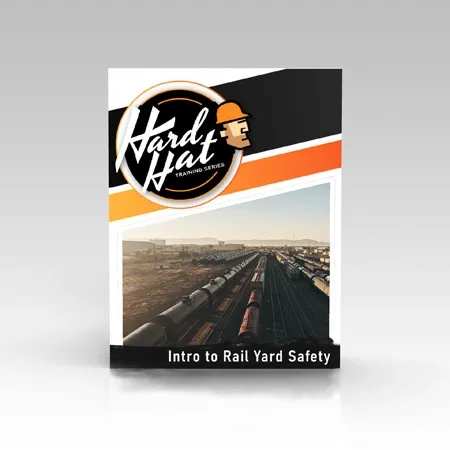
Our regulation-aligned Rail Yard Safety certification courses are updated to reflect the most recent changes made to safety standards. Whether you want a certification in as little as two hours, or a more robust training, we can help! We offer online trainings that can be completed in a day, DIY training kits that provide training materials, Train the Trainer certifications that certify individuals to train others and provide training materials, or onsite training. No matter what you choose, we can get you what you want, at a price you can afford.

Online training is for those who prefer self-paced training from any location and/or for employers who need to assign and monitor employee training progress and exam scores.

The training kit is for those who want the freedom of doing the training themselves. It is a PowerPoint Presentation (PPT) that you can present yourself to a group of trainees.

Train the Trainer courses are online and meant to certify an individual to use the training kit to train others. Training kit and materials are included with the Train the Trainer online course for no additional cost.

What’s in the Rail Yard Safety Training Course?
Our railcar mover safety training course is OSHA Aligned, and our online version fulfills OSHA’s classroom training requirement.
Training Scope: Each class contains the following information:
- Safe Operations
- PPE
- On the Rails
- Near Machines
- Working On, Inside, or Under Equipment
- Blue Flag Rules
- Communication
- Flags
This presentation includes intermittent practice quiz questions to prepare for the final written exam included with the course. In addition to the written exam, this course also includes a checklist for employers to use when administering a practical exam as required by OSHA.
Estimated Training Length: Because everyone learns and progresses at different speeds, the amount of time you spend taking this training will vary. However, the estimated time for this training is 1.5 – 2 hours.
Intended Audience:
- Employees
See Purchase Options
For most courses, we offer OSHA trainings in English and Spanish, CAL/OSHA trainings in English, and Canada trainings in English. See all of our options!
Online Purchase Options
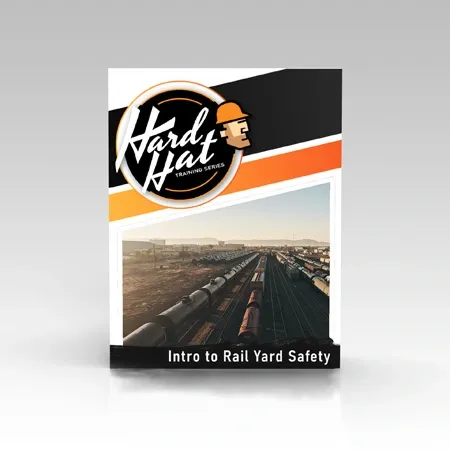
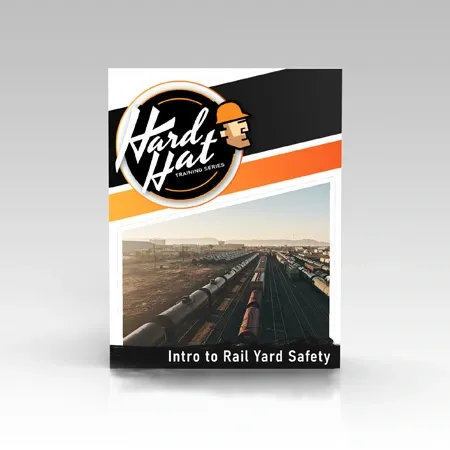
Training Kit Purchase Options
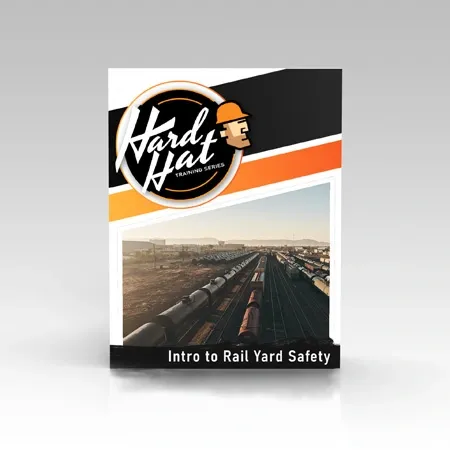
Train the Trainer Purchase Options
Rail Yard Safety Certification Standards
-
U.S. Standards
- 49 CFR Part 214 Subpart A – General Railroad Workplace Safety
Industry Wide Labor-Management Safety Committee Safety Bulletin #28 – Guidelines for Railyard Safety - 49 CFR Part 218 Subparts B, C, and D – Blue Signal Protection of Workers, Protection of Trains and Locomotives, and Prohibition Against Tampering With Safety Devices
- 49 CFR 219.623 – Records (regarding Drug and Alcohol Control)
- OSHA Standard 1917.17 – Railroad Facilities
- 49 CFR Part 214 Subpart A – General Railroad Workplace Safety
-
Canada Standards
- R.O.R.
- Transport Canada – Standards Respecting Railway Clearance
- Railway (Alberta) Act
Train the Trainer Certification
The Train the Trainer option is used to certify a trainer to teach others using the included training kit. It incorporates the online course with an additional train the trainer module, as well as the training kit. This option results in an regulation-aligned lifetime trainer certification from Hard Hat Training. This certification is not company-specific, meaning you can take it with you should you change employers.

Why Do I Need Rail Yard Safety Training?
In line with OSHA requirements, anyone who works with electricity must receive training prior to working on their own. OSHA requirements for refresher training related to forklifts or other processes are very specific. Most other equipment doesn’t have such specific requirements, but it’s wise to follow the same guidelines.
When it comes to refresher training, OSHA’s standard in some instances (like forklifts) are very specific: operators must be re-evaluated every three years to see if they are still competent to operate the equipment. Best practices say to apply this same rule to all types of equipment. A so-called “free-pass” cannot be awarded based on experience, age, or time on the job. The extent of the evaluation is to be determined by the employer but should include a written and practical examination that prove continued competency.
Stay Informed On All Things Rail Yard Safety
-
Did You Know?
It is estimated that trains kill one person every 100 minutes
Nearly 1,000 people are killed in train related accidents each year.
Occupants of vehicles that collide with a train have been calculated to be 40 times more likely to die than if they had collided with another vehicle of comparable size.
It takes at least a half mile for a train to stop, though it normally will take longer.
See Purchase Options
For most courses, we offer OSHA trainings in English and Spanish, CAL/OSHA trainings in English, and Canada trainings in English. See all of our options!
