Reasonable Suspicion Training & Certification
Hard Hat Training courses meet all training requirements set by OSHA and CSA.
We Offer Three Types of Reasonable Suspicion Safety Trainings
Our regulation-aligned Reasonable Suspicion certification courses are updated to reflect the most recent changes made to safety standards. Whether you want a certification in as little as two hours, or a more robust training, we can help! We offer online trainings that can be completed in a day, DIY training kits that provide training materials, Train the Trainer certifications that certify individuals to train others and provide training materials, or onsite training. No matter what you choose, we can get you what you want, at a price you can afford.

Online training is for those who prefer self-paced training from any location and/or for employers who need to assign and monitor employee training progress and exam scores.

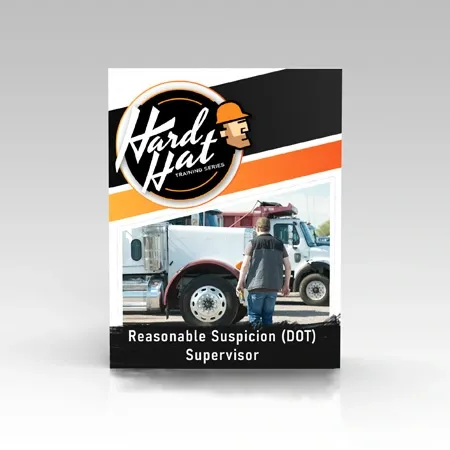
The training kit is for those who want the freedom of doing the training themselves. It is a PowerPoint Presentation (PPT) that you can present yourself to a group of trainees.

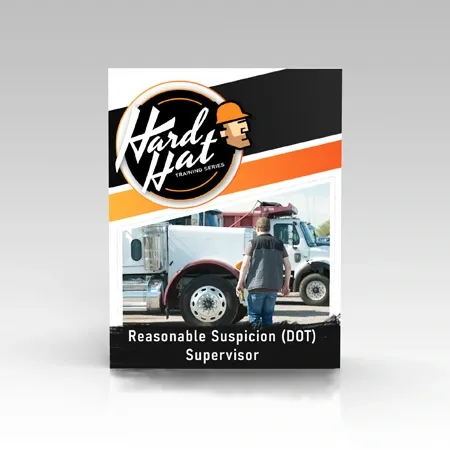
Train the Trainer courses are online and meant to certify an individual to use the training kit to train others. Training kit and materials are included with the Train the Trainer online course for no additional cost.

What’s in the Reasonable Suspicion Training Course?
Our Reasonable Suspicion training course is built to OSHA and FMCSA standards. This class discusses topics including the supervisor, drugs and alcohol, taking action, testing, post-procedures, and more.
This presentation includes intermittent practice quiz questions to prepare for the final written exam included with the course. In addition to the written exam, this course also includes a checklist for employers to use when administering a practical exam as required by OSHA.
Estimated Training Length: Because everyone learns and progresses at different speeds, the amount of time you spend taking this training will vary. However, in accordance with the FMCSA, this training should last at least 2 hours.
Intended Audience:
- Supervisors
- Managers
- Employers
Though you will still need to familiarize yourself with all other applicable federal, state, and local standards, this training encompasses the following OSHA Requirements for reasonable suspicion:
See Purchase Options
For most courses, we offer OSHA trainings in English and Spanish, CAL/OSHA trainings in English, and Canada trainings in English. See all of our options!
Online Purchase Options
Training Kit Purchase Options
Train the Trainer Purchase Options
Reasonable Suspicion Certification Standards
-
U.S. Standards
- 49 CFR 382.603: Training for Supervisors
- 49 CFR 382.307: Reasonable Suspicion Testing
- 49 CFR 40.43: What steps must operators of collection sites take to protect the security and integrity of urine collections?
- 49 CFR 40.223: What steps must be taken to protect the security of alcohol testing sites?
- 49 CFR 40.323: May program participants release drug or alcohol test information in connection with legal proceedings?
Train the Trainer Certification
The Train the Trainer option is used to certify a trainer to teach others using the included training kit. It incorporates the online course with an additional train the trainer module, as well as the training kit. This option results in an regulation-aligned lifetime trainer certification from Hard Hat Training. This certification is not company-specific, meaning you can take it with you should you change employers.

Why Do I Need Reasonable Suspicion Safety Training?
The Federal Motor Carrier Safety Administration (FMCSA) requires driver supervisors to receive at least an hour of training on alcohol misuse and an hour of training on drug misuse. For the purpose of this training, we have combined both alcohol misuse training and substance use training into a single 2-hour safety training. The purpose of this is to give supervisors a complete overview of substance abuse procedures related to both drugs and alcohol.
Employers and supervisors have a responsibility to create a safe working environment for their employees. This includes knowing when employees may be unfit for safety-sensitive duties through reasonable suspicion.
Because of the requirements laid out by the FMCSA, employers have a legal and ethical obligation to develop and maintain a workplace that is free from hazards associated with substance abuse. Employees have the right to work in an atmosphere that promotes the safety and well-being of all.
Stay Informed On All Things Reasonable Suspicion
-
Did You Know?
Every day, 29 people in the United States are killed in crashes involving impaired driver.
Every year, the annual economic cost of impaired driving crashes is more than 44 billion dollars.
Drugs besides alcohol are involved in roughly 16% of all motor vehicle crashes. (Source: CDC).
See Purchase Options
For most courses, we offer OSHA trainings in English and Spanish, CAL/OSHA trainings in English, and Canada trainings in English. See all of our options!
